
All about snowshoes
In winter, nature lovers and hikers love to conquer the snowy trails. For walkers, snowshoes are a great alternative to explore new horizons.
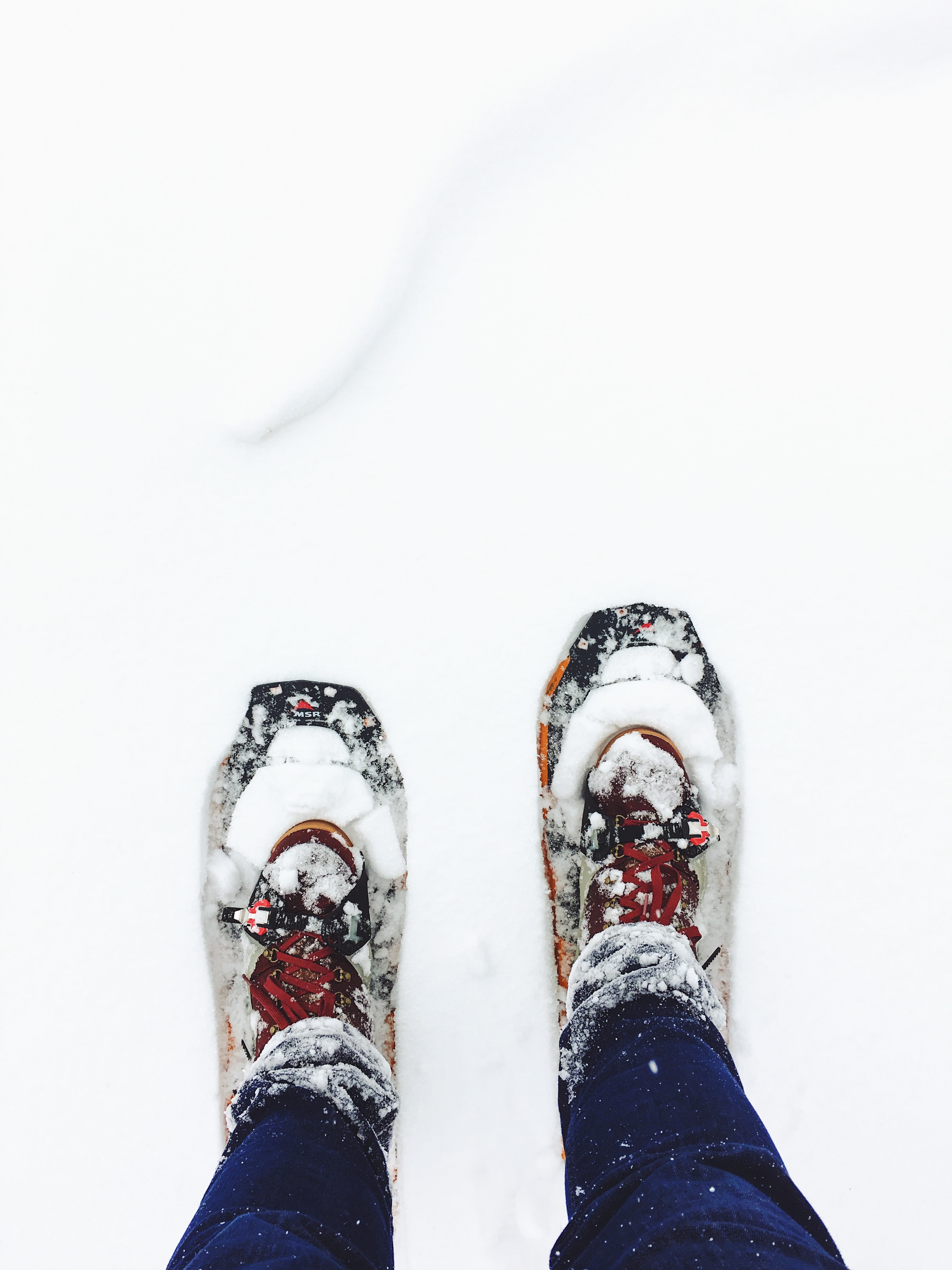
Photo by Greg Rakozy on Unsplash
Why snowshoeing?
Easy and inexpensive, accessible to all and synonymous with freedom and adventure, snowshoeing has become one of the most popular winter mountain activities. Snowshoeing is both fun and physically active. They allow you to discover the mountain in all its corners, far from the crowds that invade the slopes. And you can share this moment with family, friends or couples. The use of trekking poles can help when walking with snowshoes. They are not essential, but they help to keep a certain balance, especially when there is a lot of snow and you are going deeper.
Is it difficult to snowshoe?
Just like for classic hiking, there are easy routes and others that are less easy. One thing is sure, snowshoeing is not particularly difficult if you choose a route adapted to your level.
How to choose your snowshoes?
Good snowshoes should be light, ergonomic and resistant. Most snowshoes are made of plastic or aluminium, some advanced models may have carbon inserts. If plastic snowshoes are the most widespread thanks to their excellent quality/price ratio and their resistance to all tests, they are aimed at occasional leisure use. Aluminium snowshoes are lighter and offer better performance on long or even very long outings. Finally, for those who like speed and lightness, some models have carbon inserts to make the equipment as light as possible. For occasional snowshoers, choose soft and flexible snowshoes, capable of reproducing the natural movement of the foot as closely as possible. If you work on steep terrain, on piste and/or off-piste, you need snowshoes with excellent stability and grip. Choose models with good crampons under the forefoot.
What should you wear when snowshoeing?
Here is a checklist to help you pack your bag:
- A 1st layer or underwear: The ideal is to wear underwear made of synthetic fibres or merino wool, which are particularly effective in absorbing perspiration.
- A 2nd layer: Take a fleece which will serve to insulate your body from the cold.
- A 3rd layer: The jacket should be waterproof and breathable to protect you from the weather. Take a hooded model, which will protect you in case of wind or snow.
- Trousers: Warm and elastic, they should be able to open at the bottom of the leg or on the side to evacuate perspiration during the effort.
- Goggles: preferably a wrap-around model with side protection and a protection factor of 3 or 4.
- Gloves: they should not be too stiff but above all warm and waterproof.
- A hat
4 good reasons to snowshoe
Good physical exercise: Snowshoeing works your whole body, even the smallest muscles.
Inexpensive: Apart from the initial purchase of equipment, snowshoeing can also be rented (very inexpensive) and there is no need for a package.
Anywhere, all winter long: Whatever your winter destination, you can get out your snowshoes and go on an adventure. You'll have to take the weather into account, though. After that, you can walk wherever you want, the resorts often have marked paths for this purpose.
All levels, even beginners: Snowshoeing can be done by absolutely everyone. No experience or special skills are required.
Where to go snowshoeing?
The Lac Blanc resort offers 5 marked snowshoeing trails in the heart of the Ballons des Vosges regional nature park, which gives access to magnificent snowy panoramas.
In the Jura on the marked trails of the Haut-Jura regional nature park. And more precisely, at the 4 Nordic sites of Grandvaux offering snowshoeing circuits from 2 to 9 km.
In the Massif Central, there are some of the best routes for snowshoeing. Beginners can start with the Les Plaines circuit, while the more adventurous can hike to the summit of the Puy Gros at an altitude of 1485 metres. All of this is surrounded by splendid panoramas of snow-covered lakes and volcanoes.