
The different ways of skiing
In this section, you will discover the different ways of skiing! To make the most of all the benefits of the mountains. Here are a few ideas for your next trip!
Downhill skiing
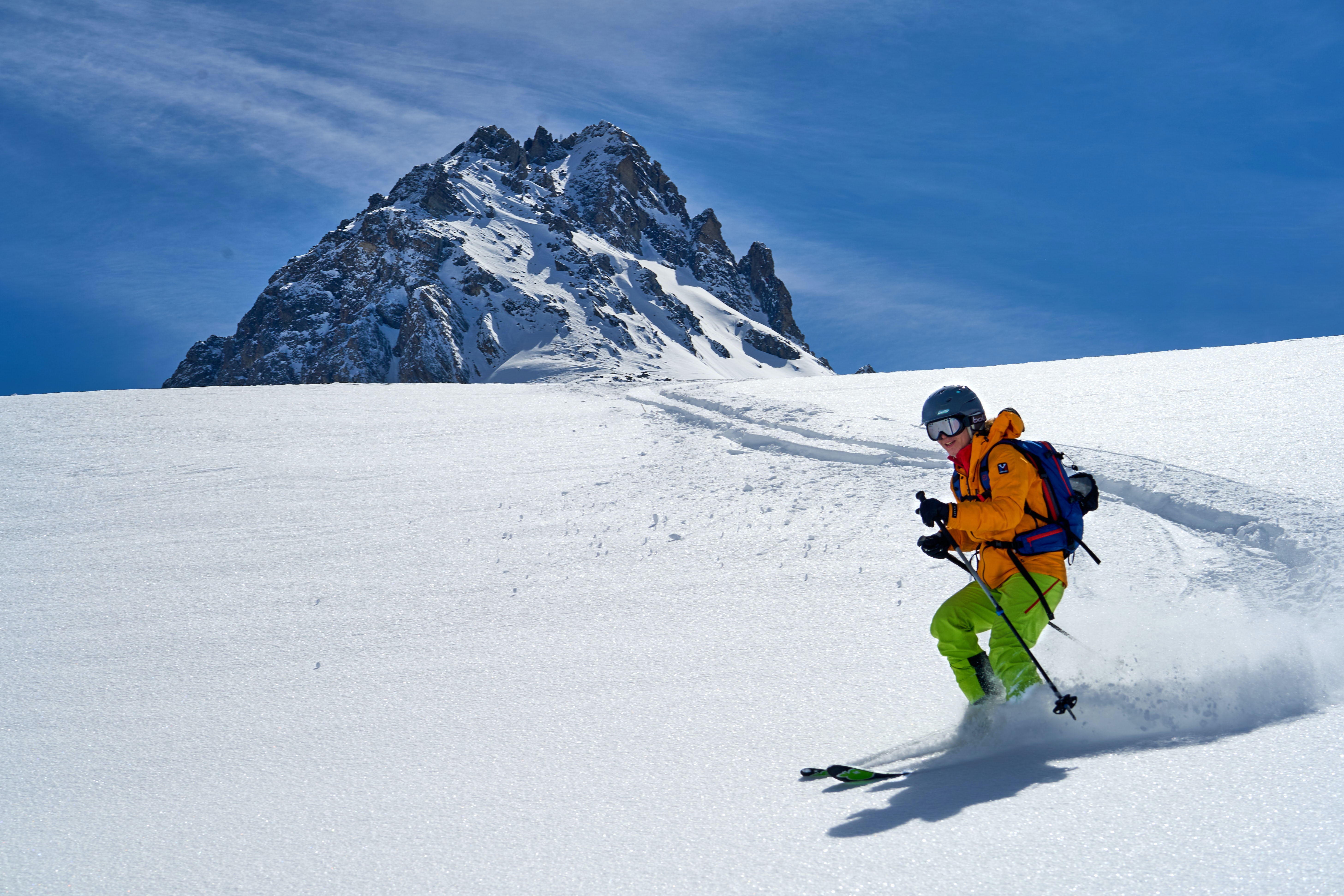
Photo by Cyprien Delaporte on Unsplash
Downhill skiing is a sport that consists of skiing down a snowy slope. Today, alpine skiing is mainly practised in a ski resort equipped with lifts that transport skiers to the top of the mountain. The snow is groomed and avalanches are controlled. Many ski resorts also have snowmaking equipment to allow people to ski when the weather does not permit.
Understand the colours of the slopes!
In a ski resort, each piste is classified by colour according to its level of difficulty: The green piste is considered the easiest with light slopes that are easy to access and large enough to allow for smooth, wide turns. It is also a good place to learn to ski, to improve your skiing and to enjoy the peace and quiet. The blue run is easy to medium with a steeper slope, but is still accessible for beginners and intermediates. The red run is for experienced skiers as it is steeper and narrower. Finally the black run, the most difficult, is used by skiers of a higher level, with a more marked difficulty, more technical and steep slopes to take speed.
How to start?
For a first experience, it is advisable to take a course with a ski instructor. This will allow you to learn the right techniques to get started on the right footing.
Who is it for?
Downhill skiing is for children, adults, thrill-seekers and those who want to admire the beauty of the winter landscape. It is an opportunity to enjoy the pure mountain air with family and friends, but above all to have fun on marked and safe ski runs.
Where to go?
In France, most of the mountain ranges such as the Alps, the Pyrenees, the Vosges, the Jura and the Massif Central have infrastructures suitable for skiing, so the choice is vast.
Cross-country skiing
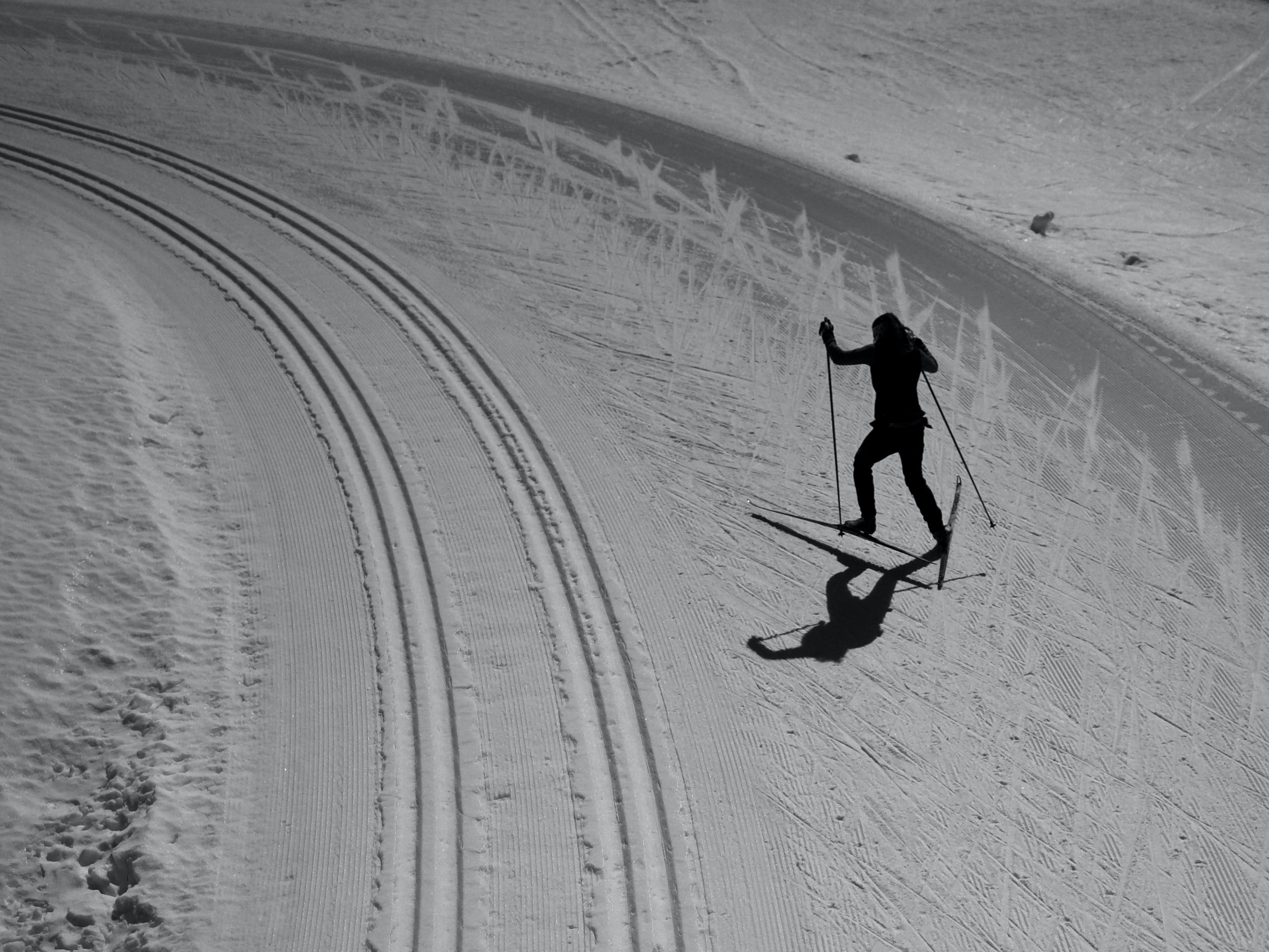
Photo by Thomas Dils on Unsplash
Cross-country skiing is the oldest form of skiing. It is an excellent way to enjoy the snowy landscape during the winter. Whether on or off-piste, on hilly terrain or not, young and old alike will find cross-country skiing a fun and complete sport in the great outdoors! There are no ski lifts in cross-country skiing, it is your body that takes us up the slopes.
The tracks are groomed for cross-country skiing, they are identifiable by the two parallel rails at the end of the track to allow classic cross-country skiers to slide with their feet parallel in them.
The difference between Classic and Skating?
In cross-country skiing, there are two techniques: classic cross-country skiing, practised according to the technique of the "alternative step" which consists of advancing in two parallel tracks and resembles walking. Skating, also called "skater's stride", is practised on smoothed tracks and resembles ice skating. In ski resorts, there are places to start easily and cross-country ski instructors who will accompany you in your progress.
Cross-country skiing is a very complete sport, which involves the whole body and muscles, whatever your level. It is therefore excellent for maintaining or improving your physical fitness.
Finally, there is a label for Nordic sites called Nordic France, which ranges from one to four trees according to four main criteria: the quality of the ski areas, the diversity of the activities on offer, sustainable development and the quality of services in the resort. This label can help you find the resort best suited to your needs for this discipline.
Recommended resorts for cross-country skiing: Avoriaz, Les Saisies, Megève and Font Romeu.
Freeride / off-piste skiing

Photo by Ines Alvarez on Unsplash
Off-piste skiing is not something to be taken lightly. Off-piste skiing requires a very good level of skiing and experience. The snow and terrain conditions encountered in off-piste skiing can be very different from those encountered in on-piste skiing. An off-piste skier must be able to ski and control his or her progress in all conditions. This requires technique and versatility. It is too important to always be in control of your skis and your speed. In addition, you need to be able to assess the risks and be as aware as possible of your surroundings. Remember to check the weather and avalanche bulletins before setting off on your adventure!
For a safe trip!
Equipment is essential for off-piste skiing. Here is a list of the equipment you should always carry for your safety:
- DVA (Avalanche Victim Detector): in case of an avalanche it can save your life. It sends signals that allow the rescue services to locate and find the person buried under the snow.
- The shovel: it makes it easier to free someone buried under the snow.
- The probe: the most important object, as it allows you to find someone buried under the snow and how deep the person is.
For those who have not yet tried it, the best way to progress in off-piste skiing is to take an instructor or a guide who will help you to adopt the right technical reflexes and evolve safely.
Recommendations for off-piste skiing: Chamonix, Val d'Isère, Alpes d'Huez, La Grave and Tignes
Ski touring
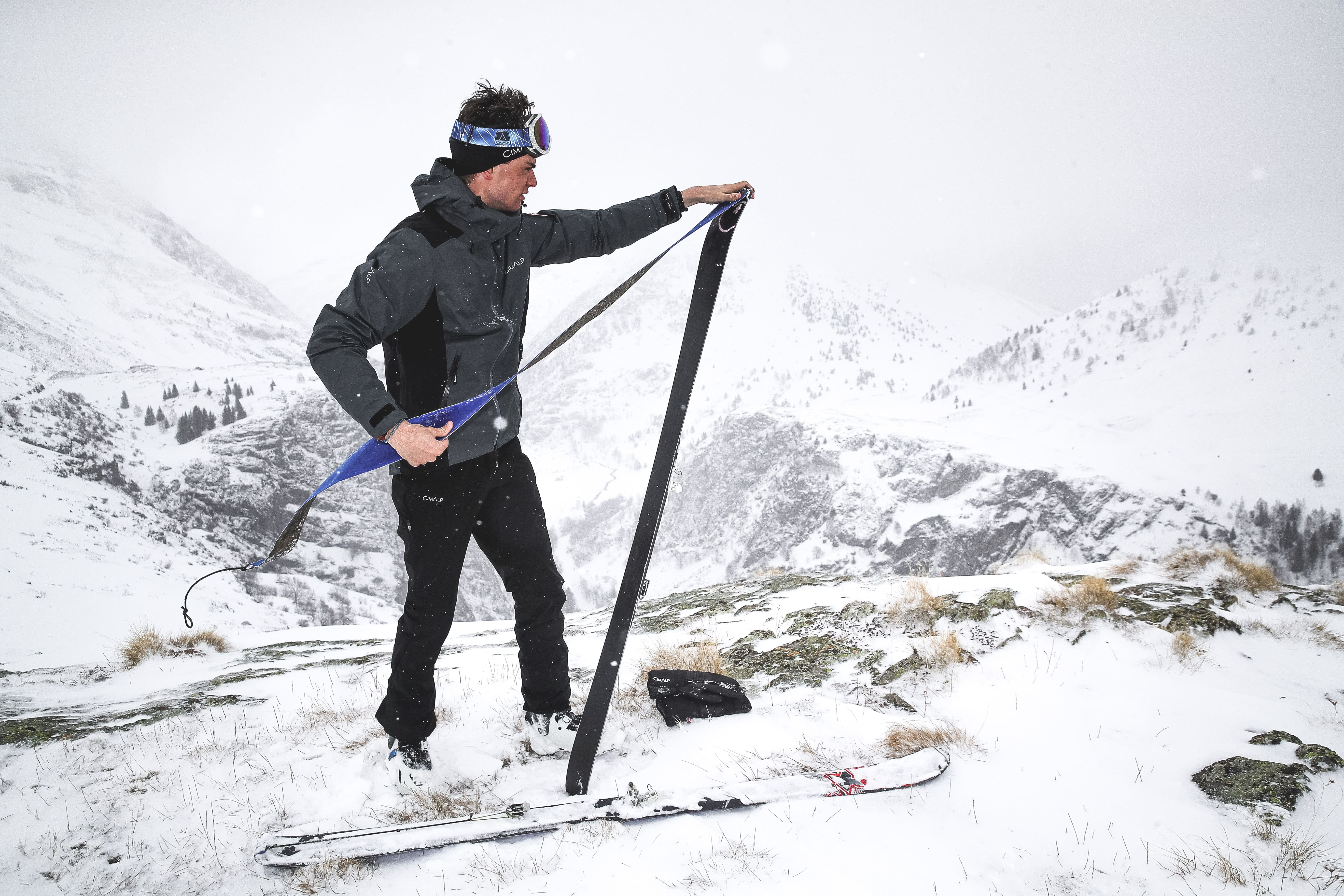
The basic principle of ski touring is to ski in the mountains without the need to use ski lifts, to climb summits and descend beautiful snow-covered slopes and thus be able to "make your mark". Ski touring allows you to immerse yourself in nature, combining the pleasure of skiing with the discovery of territories near and far. It is a discipline that respects the environment and does not require any facilities or ski passes.
The ski touring boots have a walking position and a downhill position, allowing flexibility when going up and rigidity when going down. In order to climb on snow, ski touring needs skins that are glued under the ski to avoid going backwards during the ascent. In order to have a range of movement and not to be blocked, only the front of the ski touring boot is attached to the binding during the ascent. For the descent, it is similar to alpine skiing or off-piste skiing depending on where you practice it.
If you are a beginner, it is advisable to take a guide or to take a course with a ski instructor beforehand. As with off-piste skiing, you will need safety equipment such as an avalanche beacon, a shovel and a probe to put in your backpack.
In terms of clothing, the ski tourer will wear technical clothing with an emphasis on breathability and the 3 layer system. Carry a bag to put the necessary equipment including warm and waterproof clothing. Gloves, a hat and sunglasses and/or mask will complete the equipment.
Ski touring resort recommendations: Arêches-Beaufort, Orcières, La Clusaz, La Plagne and Puy Saint Vincent.