
How to do trail running with poles?
During long distance technical races, especially ultras, poles allow you to be more efficient. Let's see how to make the most of your poles in trail running.
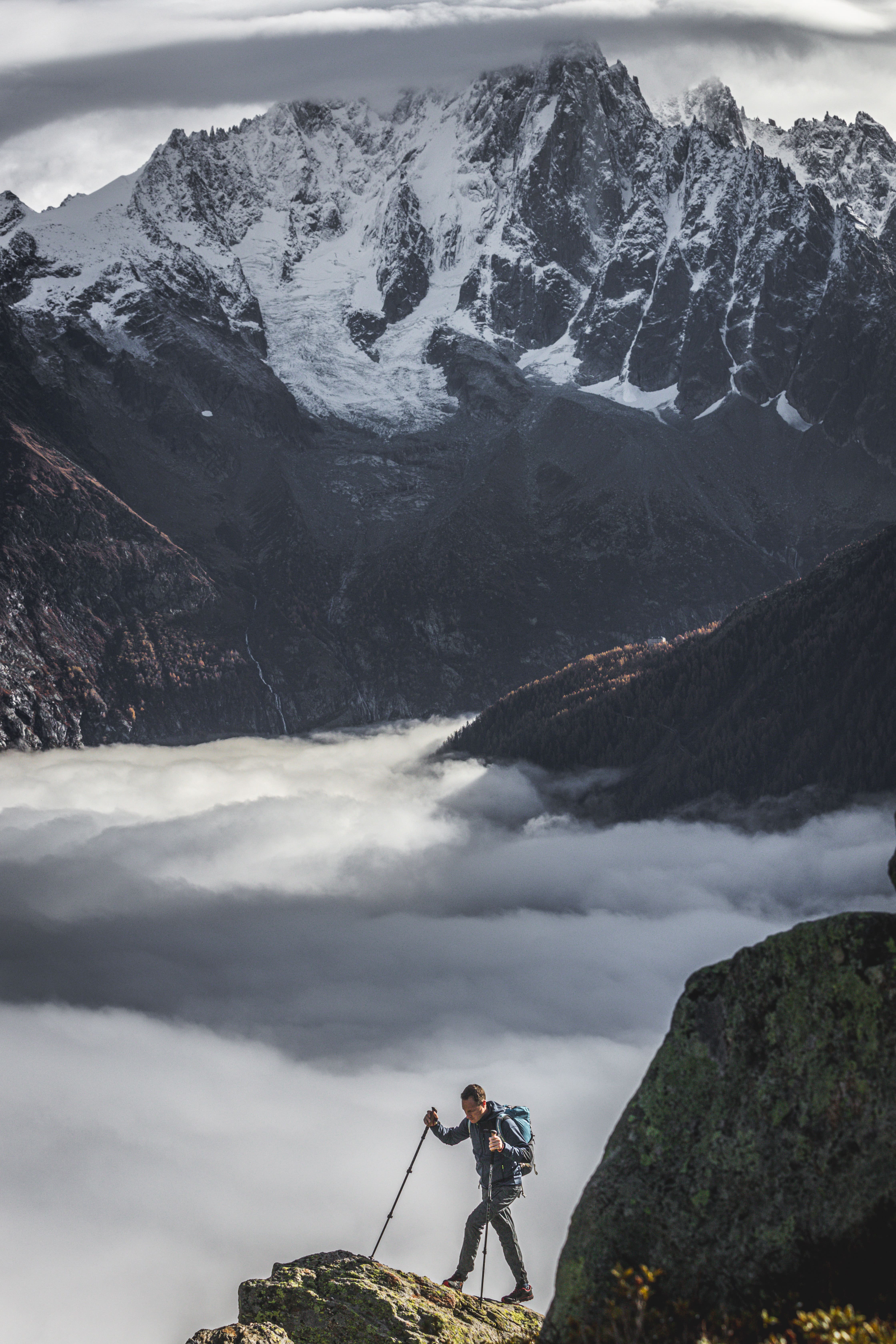
During technical events, especially on terrain with a lot of changes in altitude (positive or negative), trail poles are very useful! On the way up, they provide a welcome extra support for the legs, which gives you more strength and saves precious energy, making you less tired and therefore more enduring. On the downhill, they act as brakes and stabilisers, but they also reduce the shock and impact on the joints, and greatly relieve the quadriceps. On steep, uneven or obstacle-laden terrain, they are very supportive and improve balance by making the runner feel secure during these technical passages. In short, trail poles are a valuable ally in long-distance and technical races, for all those who want to increase their performance and endurance.
Beware: before you start using your poles in a competition, it is important to train well beforehand, because if you are not used to them, the trail poles can get in the way and slow you down more than anything else.
Using your poles when climbing
There are three different pushing techniques for ascents, depending on the difference in altitude and, above all, on your feeling.
Alternating push: for average climbs, say with a gradient of between 10 and 20%, you move forward alternately (right arm/left leg, left arm/right leg) by tilting the poles backwards, i.e. by engaging the handle before the tip, otherwise the pole might slow you down. In this case, the poles allow you to gain power and rhythm, they give you a good balance at body level and above all help you to have a fluid and dynamic stride, with a tonic gesture. You will walk fast and enjoy a steady pace.
Simultaneous push: if the slope is really steep (more than 20%), you can plant your poles simultaneously in front of you to get a big push and "pull yourself up" in one go. Plant your poles at the same time and pull yourself up with the strength of your arms, taking several quick steps during the push. By engaging both poles at the same time, you double the power, thanks to the double push.
The mixed push: if the slope is rather gentle, you can run with or without your poles. Beware, running with poles is not easy and requires a lot of training. You can use your poles alternately with a few thousandths of a second between each pole, which is almost invisible to the eye because of course everything is accelerated. Or if you want to save yourself some money, you can always plant your poles alternately, more or less every three steps.
Using your poles on the downhill
On downhill runs, poles take a lot of pressure off the quadriceps and knees. They provide more balance (especially if the terrain is slippery or steep) and help the runner jump over obstacles or step over the elements more easily. However, be careful not to get your poles caught in obstacles, such as rocks, as you may fall. Also make sure your poles are strong enough to support the weight that will be greater than for a climb, and avoid leaning on them too much to reduce the risk of breakage.
If the height of your poles is (easily and quickly) adjustable, you may want to raise them slightly before embarking on a long descent.
When you are not using your poles
There will be times during the race when you don't use your poles. You can just hold them out, but be careful to hold them with the tip facing forward! Accidents happen! Think about the runners behind you, especially at the beginning of the race, who you cannot see.
If you have foldable multi-strand poles, you can hold them folded in your hand or put them in your trail bag or attach them to your belt.
There is no secret to using poles for trail running, you just need to train hard enough. So it's up to you!