
How to choose a ski helmet?
Helmets have become an essential element of protection for skiing and snowboarding. In the event of a fall, it is better to be well protected, whatever your age or level. What are the elements to take into account when buying a ski helmet?
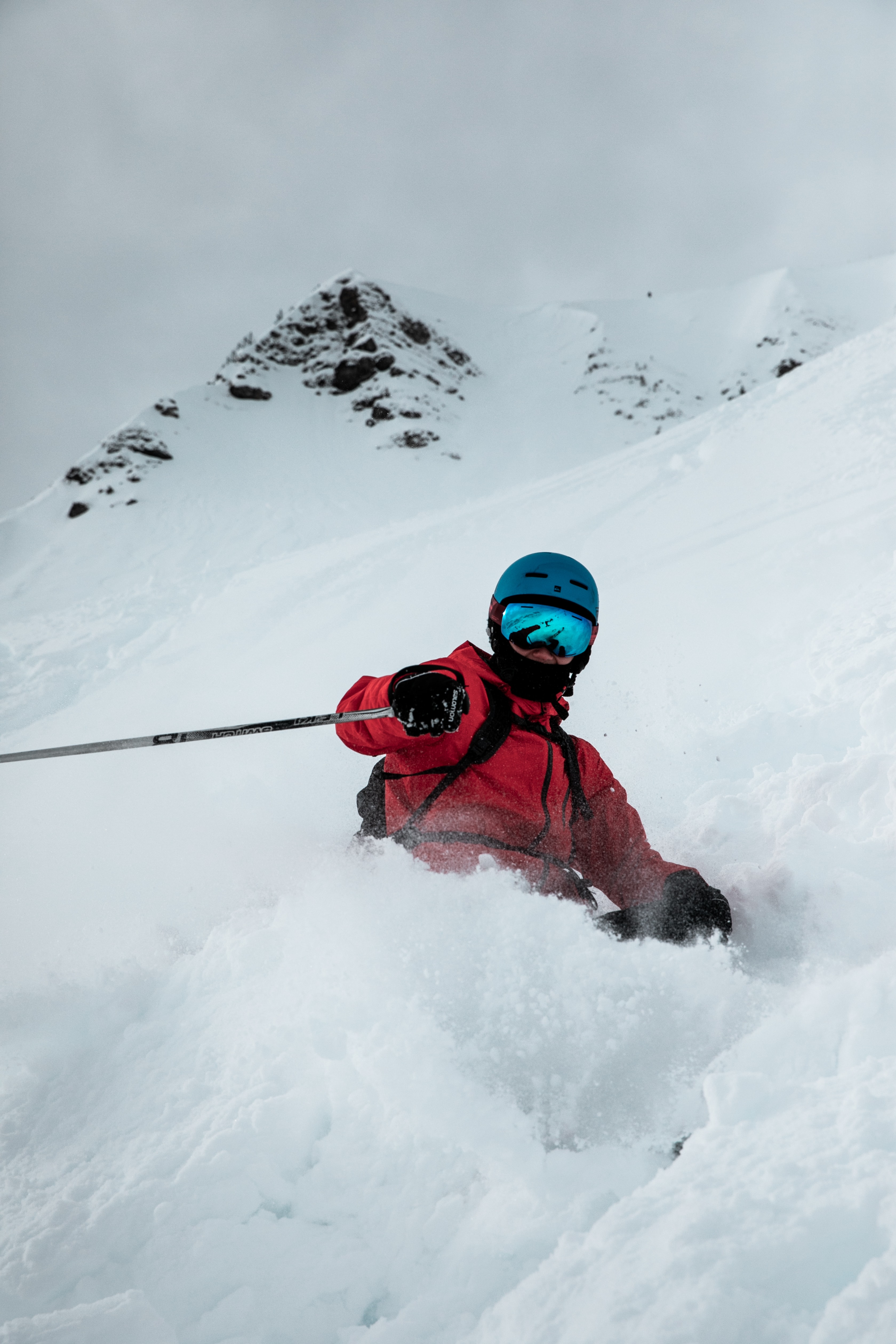
Photo by Loic Ansermoz on Unsplash
Choosing a helmet that fits your head
It is important to measure your head size. To do this, you can measure your head size with a tape measure, passing it 1 cm above the brow bone and just above the ears.
Sizes for an adult helmet :
S: 53 to 56 cm
M: 56 to 59 cm
L: 59 to 62 cm
XL: 62 to 64 cm
Children's helmet sizes are generally as follows:
XS: 44 to 47 cm
S: 48 to 52 cm
M: 53 to 56 cm
When the helmet is the right size, the tightening system must have a margin of adjustment. That is, it should neither be fully tightened nor completely loosened so that you feel both comfortable and supported. Trying several helmet models is essential to ensure the best level of comfort and safety.
5 key criteria for choosing a helmet:
Lightness: for more comfort, your helmet should be light. With In Mold technology, these helmets are among the ultra light. In terms of weight, at less than 400 grams, you are in the featherweight category. In general, we try not to exceed 550 grams.
The shape: the front part should come down to about a finger's length from the eyebrows, to leave room for a mask. For safety, the back of the helmet should not touch the neck when you lean your head back. You should not feel any pressure points, pain or discomfort.
The quality of the foam: it must be chosen carefully. EPP foam (expanded polypropylene) regains its shape after an impact and provides good impact protection.
Ventilation: Depending on the helmet, you may be able to manually adjust the ventilation system, i.e. open or close certain vents depending on the weather conditions and your degree of perspiration. From 4 vents onwards, you will benefit from optimal ventilation.
The standard: A helmet intended for winter sports must carry the NF (or CE) EN 1077 standard, specific to ski and snowboard helmets.
Maintenance of your helmet:
To facilitate its maintenance and guarantee the hygiene of your ski helmet, opt for a model whose internal covers and lining are detachable and washable.
The different external shells :
ABS
The ABS construction is the most common. It is found in most ski helmets, as it offers optimum impact resistance. It consists of two parts: the outer shell made of ABS hard plastic and the inner foam made of expanded polystyrene (EPS). The ABS provides impact protection while the lining provides thermal insulation. This last point can turn into a flaw: ventilation is not always at its best. Therefore, if you choose an ABS helmet, you should make sure that it has plenty of ventilation.
IN MOLD
At the higher end of the market, In-Mold technology offers a helmet that is moulded in one piece, making it lighter than ABS. In addition, it offers a better impact distribution over the whole helmet, therefore more safety and less risk of head trauma. The outer shell is this time made of PC (polycarbonate), directly moulded with the inner EPS foam.
HYBRID
Finally, the hybrid construction brings together the best of both helmets with an injected ABS shell on the top of the helmet to maximise impact resistance and a polycarbonate shell on the front and back of the helmet to make it as light as possible. Robust and durable over time, this requires a larger budget. This ABS shell is very resistant and increases the protection against the penetration of external objects (branches, rocks...), which are very present during freeride practice. To make the helmet a little lighter, a second shell in In-Mold protects the lower part of the skull.
To sum up, for occasional ski trips, choose an ABS helmet that perfectly fulfils its protective role. For more intensive and/or regular sessions, weight and comfort become more important criteria: opt for an In-Mold or Hybrid helmet.