
Low top shoes
What are their advantages? When should you choose them over high shoes? Let's find out the main things you need to know about low-cut shoes.

Although we generally tend to associate hiking with high shoes, low shoes have their place and are even better suited to certain types of outings. Cool and light, they tend to be less rigid than their high top cousins and less supportive of the ankle, but they are perfectly suited to hiking on easy terrain, and in some cases even in the mountains.
If you opt for low-top shoes, it is important to choose good quality shoes, not too soft, with a good sole that grips and holds well. They should be breathable but thick enough to protect your feet from stones and small rocks for example. Also remember that while they are cheaper to buy, they are also less durable and less waterproof than high top shoes.
In this post we take a look at low shoes, their advantages and when you can choose them over high shoes.
Brief definition
Much lighter than their high top cousins, they are less warm and allow experienced hikers to have a more dynamic and agile movement. They are also particularly suitable for walkers with knee problems, as they allow for greater use of the ankle and calf. Obviously, if one of your ankles is already weakened (because of an old sprain for example) they should be avoided. Otherwise, and on suitable terrain, low shoes will allow you to strengthen the muscles of your ankles but also your calves, whose work as shock absorbers will be accentuated. The increased use of your ankles and calves will spare your knees, putting less strain on them, especially on downhill runs. For greater confidence in your movements, we strongly recommend that you combine the use of low shoes with hiking poles, which provide greater balance, stability and safety. They also allow for a better load distribution, which is important to relieve your ankle, lumbar region and the whole lower body.
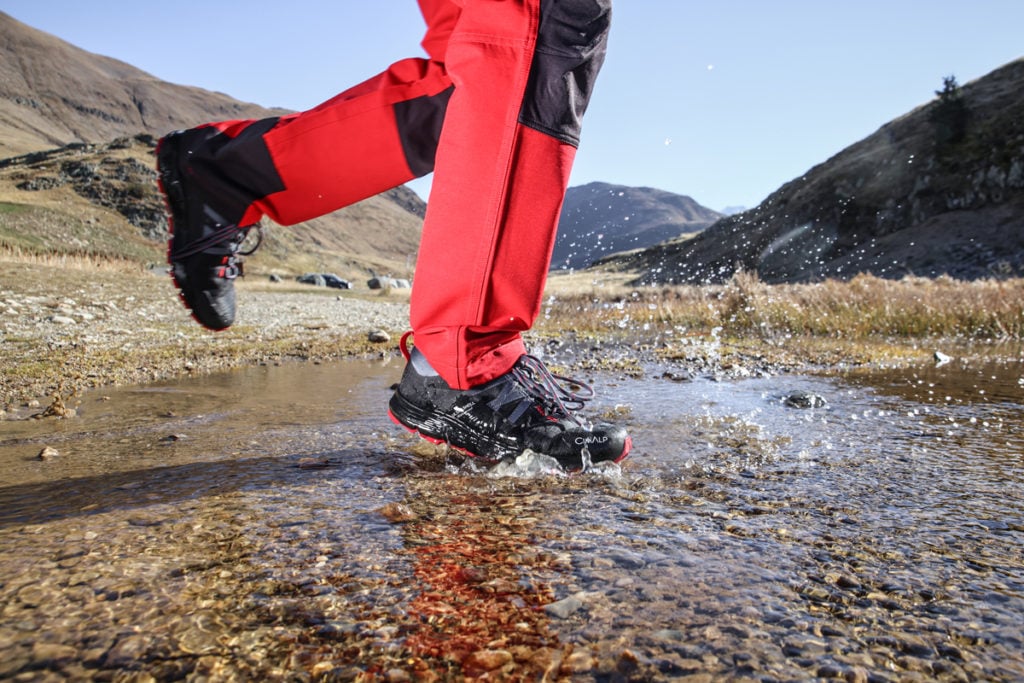
Why use low shoes?
Obviously, low top hiking boots are not recommended for all types of outings. If you're going to hike steep, rugged trails in the high mountains, or go out in bad weather and risk rain or snow, forget about low boots. But if you're planning a hike in the countryside, in the forest or on the plains in good weather, or if you're going on a trip in the sun, low-cut shoes will be perfectly suitable and even more pleasant and comfortable.
To save energy: low-cut shoes are much lighter than high-cut shoes, and when hiking, weight is never a negligible factor. Every step you take in low shoes saves a little more energy.
For a smoother foot roll: Unless you opt for trail shoes or fast-hiking shoes, low-cut hiking shoes are generally softer and more flexible than high-cut shoes. This gives your foot more freedom of movement and a smoother ride.
For cooler feet: the materials used for low-cut shoes are thinner and lighter than those used for high-cut shoes. Low-top shoes are also more breathable, so they are less hot.
For faster dry feet: because they are more airy and lower, moisture and perspiration escape more easily than in high-top shoes and they also dry out faster.
To strengthen the ankle: although high shoes provide good support for the ankle to avoid injury, they do not allow you to exercise and strengthen the ankle. But isn't it better to strengthen your muscles to reduce the risk of injury? If you don't have any particular joint problems, walking in low shoes will help you strengthen and stretch your ankles. At the beginning, you can use hiking poles to make walking safer and to compensate for clumsy movements.
To avoid blisters: high top shoes take longer to make and are usually much stiffer. If they are not sufficiently breathable, your feet will end up soaking in their own perspiration. This can lead to blisters in some people.
To be able to slip your toes between the blades of grass: this may make some people laugh, but how nice is it to dip your feet in the fresh grass after a long walk? Low shoes are quicker to lace up and take off, so there is less hesitation to remove them to remove a stone that has slipped through your shoe or simply to let your feet breathe during a break.