
Technicality of hiking clothing: what you need to know
Hiking requires clothing that is adapted to the activity. Today's hiking clothing is made of materials from intelligent fibres that provide good protection, breathability and movement management. To help you find your way around, we explain everything you need to know about technical clothing for hiking.
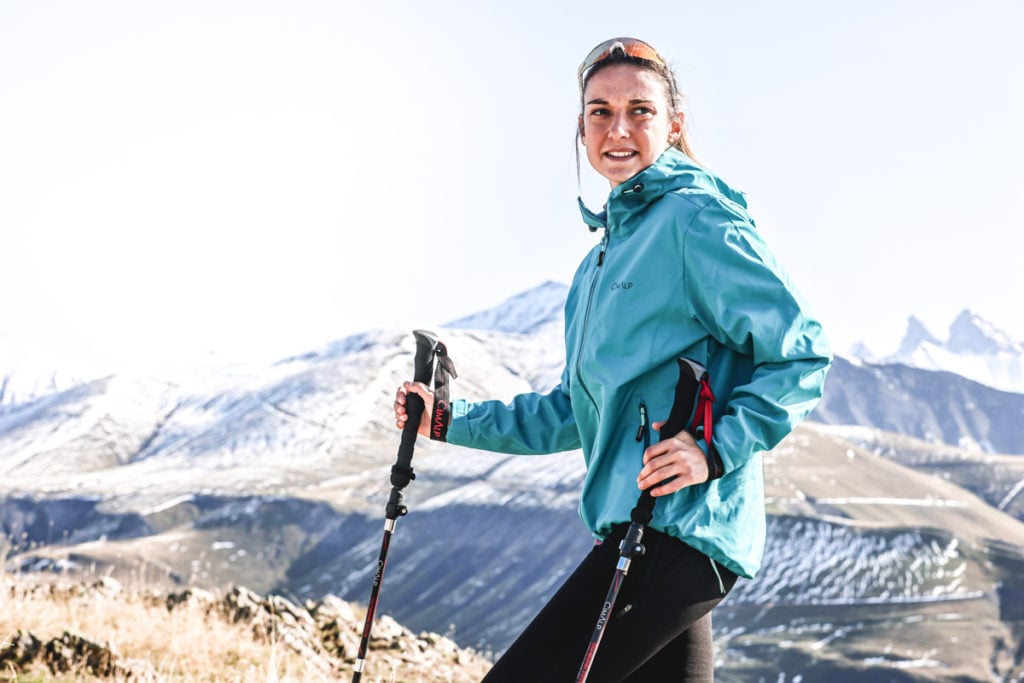
Waterproofing and resistance of technical clothing
Before buying your hiking clothes, it is important that you take into account several criteria such as the waterproofing and resistance of your clothes. They will allow you to adapt to all situations.
Today, membranes such as Gore-Tex® allow you to resist several days of bad weather without any problems. The design of their membrane prevents water from penetrating, but allows perspiration to escape from the body. This technical feature combines waterproofing, breathability and windproofing.
Other garments have a water-repellent treatment and are ideal if you plan to hike in good weather. The fabric is designed to allow water to run off along its length. This means they can withstand a light rain, but they have their limits and cannot withstand a heavy downpour.
Breathability and windproofness of technical clothing
The body can quickly become cold in the wind. Clothing with a windproof effect ensures that you do not lose the heat generated by the body. Their membrane makes them waterproof and windproof at the same time. This means that you are perfectly protected from both wind and rain.
Finally, the more waterproof a garment is, the less breathable it is. It is therefore important to find a compromise between the two. To do this, the degree of breathability of the fabric can be measured using two tools:
The MVTR or water vapour transfer rate: This is the amount of water (in the form of vapour) that a fabric allows to pass in 24 hours. The higher the rate, the more breathable the fabric. A jacket is considered to be breathable from 10,000 MVTR.
RET (Evaporative Transfer Resistance). It measures the resistance of a fabric to the evaporation of moisture. The lower the index, the more breathable the garment. A RET is very breathable if it is less than 6; breathable between 6 and 12; not very breathable between 12 and 20; not breathable above 20.
The three-layer system
When dressing for a hike, it is customary to use the three-layer system. The first layer is used to wick away perspiration and keep you dry. This is usually a technical undergarment. The second layer provides warmth through a fleece or down jacket. Finally, the third layer provides protection from the elements. A waterproof or windproof jacket is generally used.
The exception to the three-layer system is softshell jackets. Their technology allows you to use them as both a mid-layer and an outer layer. Softshell has many advantages: it is warm, windproof, more breathable than classic outer layers... It also allows you to withstand small showers thanks to its water repellency, but is not waterproof.
Choosing technical clothing allows you to go hiking in good conditions and in complete safety. Climate, season and weather are important factors to consider when choosing your clothing. If you are going hiking, especially in the mountains, it is essential to be properly equipped with waterproof, breathable, windproof clothing that is suitable for your activity.