
How to choose a hiking jacket?
When hiking, the weather is not always ideal. You have to be prepared for certain weather conditions such as rain, wind or snow. For this, it is important to be well equipped. The hiking jacket acts as a protective layer. It is chosen according to the weather conditions, the type of hiking and the intensity of the effort. To make things clearer, we explain in detail how to choose a hiking jacket.
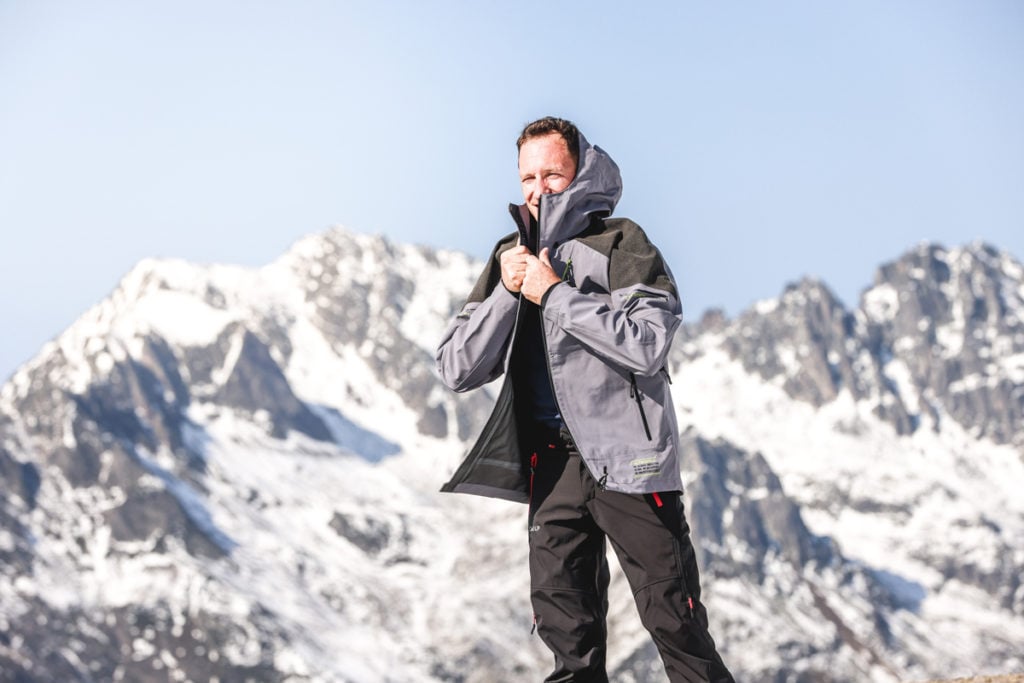
Take into account the technical nature of the jacket
Waterproofing
Protecting yourself from the elements is essential when hiking. If you are going out for a few hours, you can plan on a waterproof jacket that will protect you at least a little.
If you plan to go out in unstable weather, especially in the mountains, it is better to choose a waterproof jacket. When buying one, you can refer to the Schmerber index, which measures waterproofness. From 10,000 mm, the jacket is considered waterproof. If you decide to go to high altitudes or in more difficult conditions, you can turn to a 20,000 mm jacket which is perfectly waterproof.
Breathability
The breathability of the jacket is its ability to wick moisture from the inside to the outside. Certain membranes such as Gore-Tex® are known to combine good waterproofing and breathability. This allows protection from water while wicking away perspiration generated by the human body.
You can refer to the RET indicator to find out how breathable your garment is. A jacket with good breathability has a RET rating between 6 and 12. Below six it becomes ultra-breathable, above that not very breathable.
The last index of breathability is the value measured in g/m²/24h which expresses the quantity of water evacuated by 1m² of fabric in 24 hours. We can consider that below 10,000g/m²/24h your fabric is not very breathable, above 40,000g/m²/24h, it will be very breathable.
The windproof effect
The last essential criterion for choosing a good hiking jacket: the windproof effect. A windproof jacket keeps the body temperature constant, even in very strong or cold winds. You should therefore not neglect this criterion.
Differentiating between jacket types according to your needs
The hardshell jacket
Waterproof, durable and windproof, the hardshell jacket is perfect for hiking in unstable conditions. It has a waterproof membrane. You can use it all year round as a third layer, in addition to your base layer and insulating layer. It consists of 2 to 3 layers, is light and compressible. The only negative point is that it provides little warmth.
The softshell jacket
In contrast to the hardshell jacket, the softshell jacket can replace both the second and third layer. It is made up of a fleece-lined inner fabric and a windproof and water-repellent outer fabric. Very comfortable, it is perfect for cold weather. It provides good thermal insulation and excellent breathability. However, you should be aware of its limited waterproofing. Avoid taking it on hikes when the weather conditions are not good.
The 3-in-1 jacket
Made up of a fleece waistcoat or a removable down jacket that is added to the jacket, the 3-in-1 is extremely versatile. It has a waterproof, breathable and windproof membrane and provides good thermal protection thanks to its removable layer. You can switch from a warm jacket to a light, breathable jacket by removing the middle layer. You can use it all year round, depending on the level of effort and the temperature.
Choosing the number of layers for your hiking jacket
The number of layers refers to the type of lining in the jacket. The use of your jacket will vary depending on its lining, so it is important to know how many layers it has.
The 2-layer jacket has a floating inner lining, its membrane is welded to the outer protective fabric. It is comfortable, insulating and functional. You can use it for a day hike or even a few days trekking.
The 2.5-layer jacket is made of an outer fabric, a bonded membrane and a thin inner protection. A coating is applied to replace the inner lining. It is both light and compressible and is perfectly suited for active hiking or trail-running.
In the 3-layer jacket, the membrane is trapped between the outer fabric and the inner lining. The inner lining adheres completely to the membrane. This is the most technical, robust and high performance jacket. It is designed for trekking or mountaineering.
Choosing the model of your hiking jacket also depends on your preferences and needs. For example, your choice may be based on the number of pockets and their locations. Other elements such as waterproof closures, the type of hood or the weight of the jacket can also make a difference in the choice of your hiking jacket.