
Choosing the right hiking socks
It's not enough to have good hiking boots, you also need the right socks to go with them. Let's find out how to choose the right hiking socks.
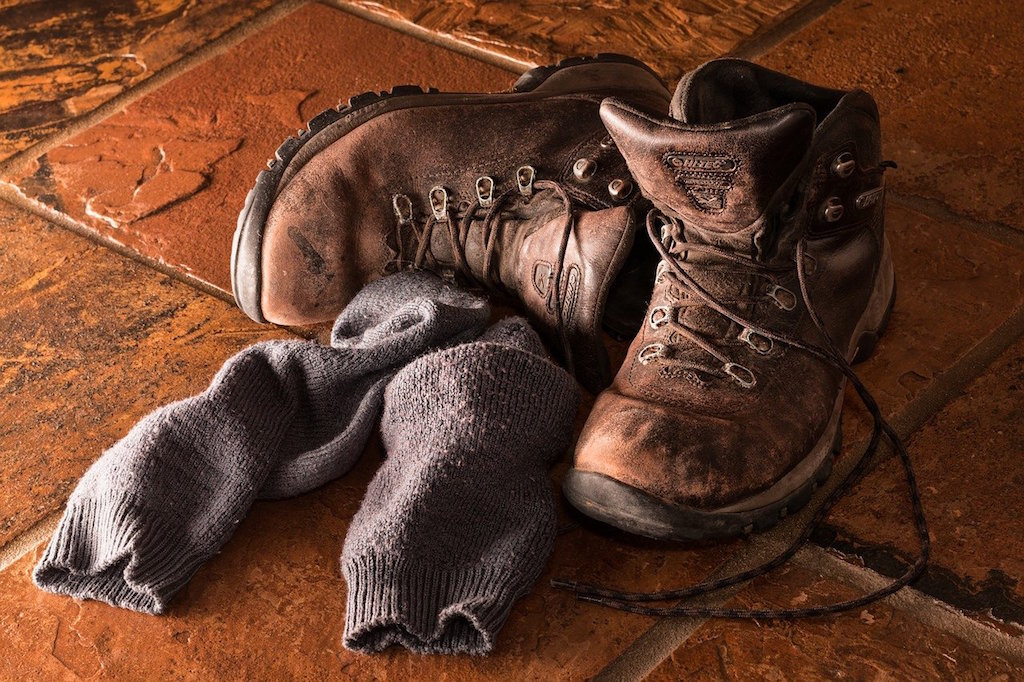
Photo: Steve Buissinne on Pixabay
You've spent a lot of time choosing the best pair of hiking boots for your level and your outings, but also the most comfortable ones that will prevent blisters and chafing. Well, you should know that almost all your efforts will be in vain if you don't choose a good pair of socks to go with them. Without the right socks, you'll end up with blisters and repeated heating up. Whether they are more or less comfortable, solid, thick, warm or high, let's look at the different criteria to help you choose the right pair of socks to make the most of your outings and limit the risk of blisters.
In any case, remember to wear only clean socks in good condition, avoid worn or stretched socks. Why should you do this? Because all parts of your foot should be covered so that your skin is never in direct contact with the shoe, but also because your socks should not have any creases that increase the risk of rubbing. So choose socks with good support, but without compressing the foot or calf, and that fit your foot perfectly. Finally, choose socks with good moisture wicking properties to make sure you keep your feet dry and reduce moisture as much as possible.
The choice of material
The material of your hiking socks determines many important factors, such as breathability, drying speed, warmth and even protection against blisters. There are many different materials used to make hiking socks, but you should know that your socks are rarely made from a single fibre, but rather from a mixture of two different materials. Let's take a look at the different materials on the market:
Merino wool: It is chosen mainly for its ability to insulate against the cold. The higher the percentage of Merino wool in your socks, the warmer they are. However, you don't have to worry about overheating, as this material is also thermoregulating. Suitable for sensitive skin, Merino wool is elastic and non-itchy (unlike basic wool), and is comfortable, soft and silky. Finally, as it is a natural fibre, it reduces the likelihood of bad odours. However, unlike other synthetic materials, it is less resistant, more expensive, tends to deform and does not wick perspiration as well.
Synthetic fibres: To promote moisture transfer, several synthetic fibres have been developed over the years by different manufacturers. These include acrylic, nylon, elastane and polyester, which wick away perspiration better than wool, are more durable, provide good protection from the cold and dry quickly. On the other hand, synthetic materials have the significant disadvantage of promoting the appearance of bad odours. This is why it is possible to use an antibacterial treatment to limit this phenomenon. Although synthetic fibres are more resistant and evacuate perspiration better than wool, the latter remains warmer, which is why it can be very interesting to combine Merino wool with synthetic fibres.
Cotton: when hiking, cotton has more disadvantages than advantages and is not really recommended. It's true that it's a natural and rather comfortable material that limits the appearance of bad odours, but it insulates poorly from the cold, is abrasive and above all, it does not evacuate moisture well, on the contrary, it absorbs it and therefore dries very slowly. Wet feet and humidity lead to overheating and the possibility of blisters and even fungal infections. This is why it is always better to combine it with other materials. In general, we recommend that you limit its use to short, relatively simple summer hikes.
The choice of height
Just as there are different shoe heights (low, mid and high), there are three different sock heights... and guess what, each sock height corresponds to a shoe height. It couldn't be easier! However, when choosing your socks, make sure that they extend slightly above the upper of your shoes, so that your skin is not in direct contact with the shoe to avoid chafing. So choose socks that are the same height or higher than your shoes. If your shoes are low or medium, don't hesitate to choose high socks for more protection and warmth. The choice of socks depends on the type of outing you are about to undertake and the temperature outside.
The choice of thickness
The choice you make about the thickness of your hiking socks should depend on the type of terrain and the type of outing you are about to undertake, but also on the outside temperatures and the characteristics of your shoes.
In summary, remember that for the same materials, the thicker the socks, the more comfortable they are and the more they insulate from the cold. This also means that you are more likely to sweat more quickly.
If you have to hike in cold weather, or even in the snow, choose thick, high socks with a rather high percentage of Merino wool. If you have to hike in hot weather, avoid socks that are too thick, which can make you sweat, or too thin, especially if you hike in the mountains where your feet tend to bump into the sides of the shoe. In general, socks that are too thin increase the likelihood of rubbing. In summer, therefore, choose socks of intermediate thickness with a high potential for breathability and wicking.
Details that make a difference
The material, height and thickness of the hiking socks are very important criteria in the choice of your socks, but they are not everything. The design of a hiking sock is much more complex than you might think and there are many other details that should not be overlooked when buying. Here is a quick overview:
Comfort: it is important that the socks are as comfortable as possible and that pressure points are kept to a minimum. What may seem like a minor inconvenience when trying on the socks or during the first few minutes, soon becomes a factor in blisters or annoying pain during the ride. This is the main reason why it is necessary to have flat seams, especially around the toes, and a stretchy upper so that the calf is not compressed.
If possible, choose socks that are adapted to the shape of your foot, which can vary according to the alignment of the toes, the arch of the foot, the width or volume of the foot. There are also pairs with specific socks for each foot, the left and the right, which are even more adapted to the shape of the foot but less durable since they are not interchangeable and therefore constantly used in the same way in the same places.
Support: Although the calf should not be compressed, for example, for reasons of blood circulation, the sock should not be allowed to sink or slip under the toes. For this reason, many socks have support strips in different areas of the foot. This factor also depends on the material chosen and the size of the sock, which must be the right one. In general, the different sizes of hiking socks are arranged in ranges, so if your exact size is between two ranges, choose the lower range.
Reinforcement zones: the more you practice and the more you practice on steep terrain, the more necessary it is that your socks have quality reinforcements. They promote durability, protect the foot and reduce the risk of blisters. These reinforced areas are mainly found in the heel area, which is particularly stressed when climbing (note: the higher the shoe, the higher the reinforcement area should be), and in the toe area to prevent overheating and absorb shocks against the sides of the shoe, particularly when descending. You should also know that a suitable material, i.e. thick and soft like fleece or buckles, absorbs shocks and reduces friction and contact points.
Breathable zones: These are essential for wicking away perspiration and reducing moisture in the sock (and therefore the risk of blisters and odour).
Double skin anti-blister socks: there are double-layered anti-blister socks made from two layers of fabric. This way, the friction is between the two layers of fabric and not between your foot and the sock. Not bad, eh?
Waterproof-breathable socks: and because progress is never ending, technology has made it possible to develop a waterproof-breathable membrane suitable for hiking socks. Such socks are used with non-waterproof footwear when hiking in the rain. We advise you to keep them in your rucksack and only take them out in case of rain, as they are rather stiff and still less breathable than classic socks.